Organic vs. Social vs. Referral Traffic: Which Channel Brings Better Visitors?
Compare organic, social, and referral traffic to discover which channels bring engaged visitors, qualified leads, and better website conversions.

Quantalog
14 min read
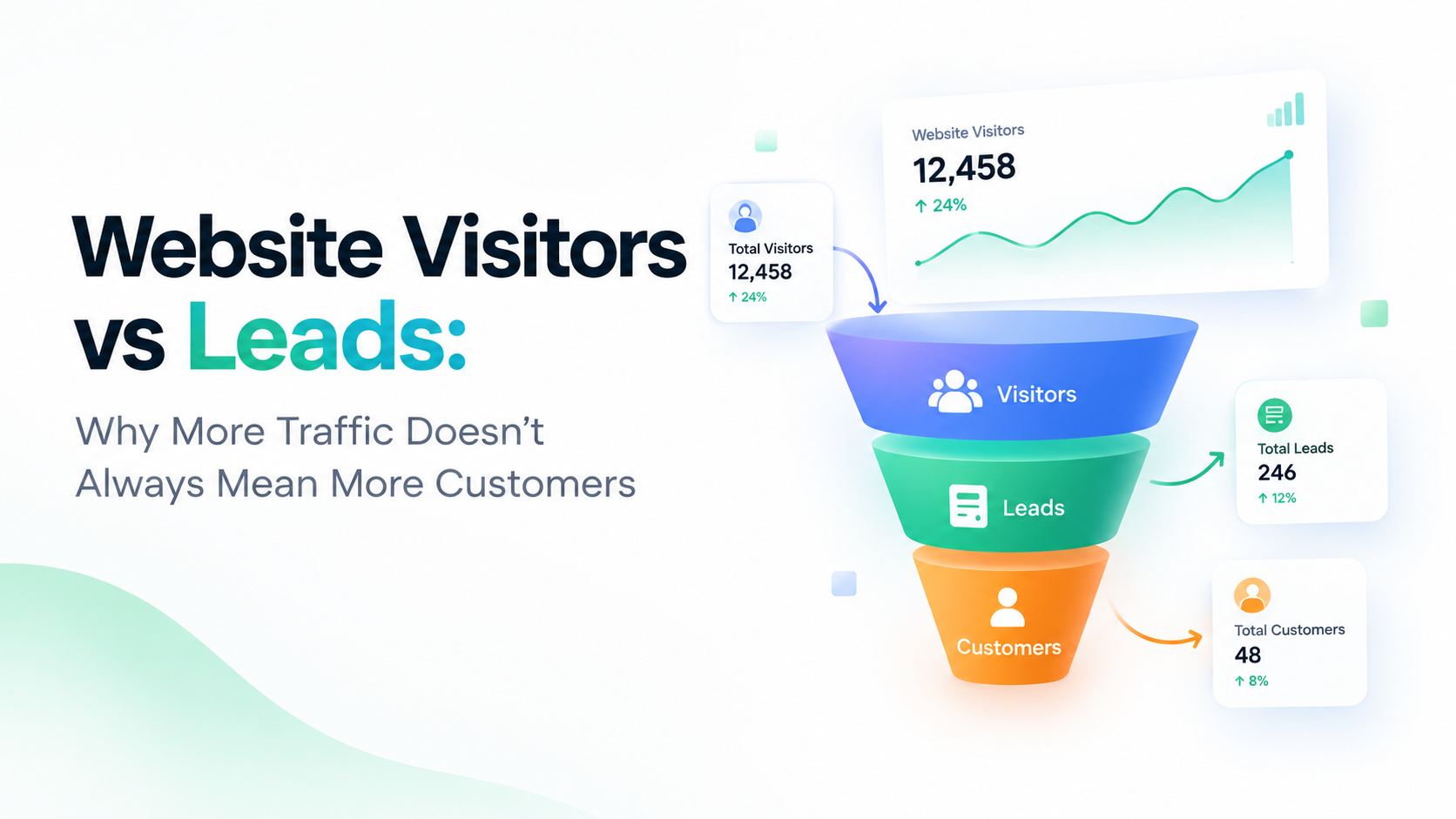
Getting more visitors to your website sounds like a straightforward way to grow your business. But what happens when your traffic increases and your leads, signups, or sales remain unchanged?
The problem might not be how many people visit your website. It might be where those visitors come from and what they intend to do when they arrive.
A visitor discovering your website through Google may be actively searching for a solution. Someone arriving from social media might be exploring an interesting idea without planning to buy anything. Another visitor might click a recommendation from a trusted industry website and arrive ready to evaluate your product.
These visitors can behave very differently, even when they land on the same page.
Organic, social, and referral traffic each play a different role in the customer journey. The best channel isn't necessarily the one that attracts the most visitors. It's the one that contributes to your business goals efficiently and consistently.
In this guide, we'll compare the three traffic sources, explain how to measure visitor quality, and show you how to identify which channels deserve more attention.
What Are Organic, Social, and Referral Traffic?
Before comparing their performance, it's important to understand what each traffic source represents.
1. Organic Traffic
Organic traffic generally refers to visitors who arrive through unpaid search engine results.
For example, someone searches Google for "best website analytics tools," discovers one of your blog posts, and clicks through to your website. That visit is typically classified as organic search traffic.
Organic traffic can come from search engines such as Google and Bing, depending on your analytics platform and channel definitions.
Why it matters
Organic search can connect your website with people actively looking for information, products, or solutions. When your content matches their needs, these visitors may be more likely to explore relevant pages or take meaningful action.
Organic traffic can also continue delivering visitors after a page is published, although rankings and traffic can fluctuate as competition, search behavior, and search engine systems change.
Common examples include:
Visitors discovering educational blog posts.
Potential customers searching for product comparisons.
Users finding a service page through a relevant query.
People looking for answers to a specific problem.
Organic traffic isn't automatically high quality. A page may attract thousands of visitors searching for information unrelated to your product or business. Search intent matters as much as traffic volume.
2. Social Traffic
Social traffic comes from links shared on social media platforms, such as LinkedIn, Facebook, Instagram, Reddit, and other social networks.
Imagine publishing a LinkedIn post about a common analytics problem. Readers who click the link and visit your website may be recorded as social traffic, depending on referral information, campaign tagging, and your analytics platform's classification rules.
Why it matters
Social media can help you introduce your brand to new audiences, distribute content, build relationships, and generate interest in products or services.
Unlike organic search, where a visitor often begins with a specific query, social visitors may discover your content while browsing their feeds.
Common examples include:
Visitors clicking a LinkedIn article.
People opening a product link from an Instagram profile.
Users visiting after seeing a post in a relevant community.
Prospects clicking a product demonstration shared on social media.
Social traffic can generate excellent leads, especially when your content reaches the right audience. However, a post that receives many likes or clicks doesn't necessarily generate qualified prospects.
3. Referral Traffic
Referral traffic generally describes visitors who arrive through links on other websites rather than through search engine results or direct navigation.
For example, a software review website publishes an article comparing analytics platforms and includes a link to your product. Visitors who click that link may appear as referral traffic.
Why it matters
Referral traffic can introduce your website to audiences who already trust the publication, community, partner, or resource that recommended you.
Relevant referrals can be particularly valuable when visitors arrive with context about your product or when the referring website helps establish credibility.
Common examples include:
Visitors clicking a link from an industry blog.
Users arriving from a software directory.
Prospects following a partner's recommendation.
Readers clicking a link in an online publication.
Visitors discovering your product through a relevant resource page.
Referral traffic also varies in quality. A link from a highly relevant industry resource may attract valuable prospects, while a link from an unrelated website may generate little engagement.
One important distinction: some platforms classify visits from social networks as referral traffic when their channel rules don't recognize the source as social. Email links, campaign tags, redirects, and privacy settings can also affect attribution.
Organic vs. Social vs. Referral Traffic: Key Differences
Each channel offers different advantages, costs, and opportunities.
Factor | Organic | Social | Referral |
|---|---|---|---|
Main discovery method | Unpaid search results | Social posts and profiles | Links from other websites |
Typical visitor intent | Often query-driven | Often discovery-driven | Depends on the referring page |
Main strength | Long-term search visibility | Audience reach and engagement | Recommendations and contextual discovery |
Time to results | Often gradual | Can be rapid or inconsistent | Depends on partnerships and link exposure |
Content opportunities | Guides, tutorials, comparisons | Posts, visuals, discussions, videos | Reviews, partnerships, resources |
Measurement focus | Search intent and conversions | Audience relevance and conversions | Referrer quality and conversions |
Main challenge | Competition and changing rankings | Variable attention and reach | Uneven referral relevance |
These are general patterns rather than fixed rules. A targeted social campaign may generate stronger buying intent than a broad search query, while a highly relevant referral can outperform both.
The right comparison depends on your audience, business model, and conversion goals.
Which Traffic Channel Brings Better Visitors?
The answer depends on what you mean by a better visitor.
If you're measuring awareness, a visitor who discovers your brand through social media may be valuable even if they don't convert immediately.
If you're measuring qualified leads, a smaller number of visitors arriving through a relevant industry referral might outperform a much larger social audience.
If you're measuring purchases, visitors who arrive through high-intent organic searches may perform particularly well when your landing page directly addresses their needs.
Instead of declaring one channel the winner, evaluate each source against specific business outcomes.
Organic Traffic: Best for Capturing Existing Demand
Organic search can be especially useful when people already know what problem they need to solve.
Consider someone searching for "how to track website conversion rates." They have a specific question and may be interested in analytics tools that help answer it.
A helpful article can attract that visitor, demonstrate your expertise, and guide them toward a relevant resource or product page.
However, not every search query indicates commercial intent. A visitor searching for a definition may be less likely to sign up immediately than someone comparing software solutions.
To evaluate organic traffic, examine the search intent behind your highest-performing pages and whether visitors continue to relevant pages or complete meaningful actions.
Social Traffic: Best for Discovery and Audience Development
Social platforms help you reach people who may not be actively searching for your product.
A useful post, visual, or tutorial can introduce your brand to a relevant audience and encourage visitors to explore your website.
Social traffic can also support product launches, content distribution, community building, and repeated exposure to your brand.
But engagement metrics need context. Likes, shares, and clicks are useful indicators of attention, not proof of business value.
Track whether social visitors read relevant content, explore product pages, subscribe, request demonstrations, or become qualified leads.
Referral Traffic: Best for Relevant Recommendations and Partnerships
Referral traffic can be powerful when the referring website reaches the same audience you want to serve.
For example, a development blog that recommends an analytics solution to its readers may attract visitors with a clear reason to investigate that solution.
A relevant referral may also help establish trust because the visitor discovered your website through an existing resource.
However, don't evaluate referrals solely by the reputation or size of the referring website. Review the actual visits, engagement, conversion outcomes, and relevance of the audience.
The Metrics That Reveal Visitor Quality
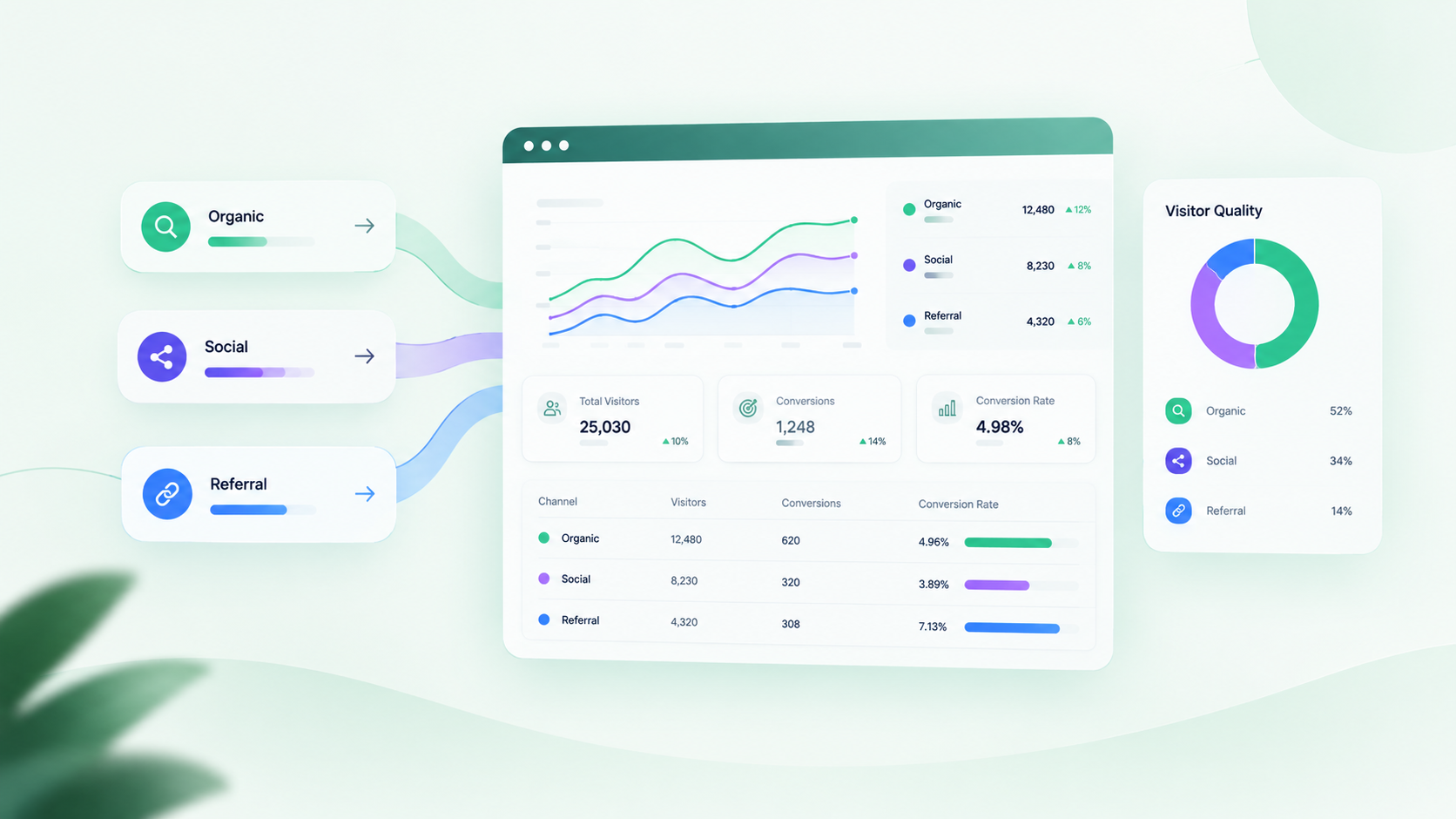
Traffic volume alone cannot tell you whether a channel is contributing to business growth.
To compare organic, social, and referral traffic fairly, measure a combination of acquisition, engagement, and conversion metrics.
1. Engagement Rate
Engagement rate helps you understand whether visitors meaningfully interact with your website.
Depending on your analytics platform, an engaged session may be defined using conditions such as session duration, conversion events, or multiple page or screen views.
Compare engagement rates across channels, but interpret them in context. Someone who finds a quick answer and leaves may still have had a successful experience.
2. Conversion Rate
Conversion rate measures how frequently visitors complete a defined action.
Depending on your business, that action could be:
Submitting a contact form.
Creating an account.
Requesting a demo.
Downloading a resource.
Completing a purchase.
Formula:
Conversion rate = Conversions ÷ Eligible visits or users × 100
Choose a consistent denominator and apply it across the channels you're comparing.
For example, if organic traffic generates 40 conversions from 1,000 eligible sessions, its session-based conversion rate is 4%.
If social traffic generates 15 conversions from 750 eligible sessions, its session-based conversion rate is 2%.
In this example, organic traffic has the higher conversion rate. That doesn't automatically make it the more profitable channel, because acquisition costs, lead quality, and customer value may differ.
3. Qualified Lead Rate
For businesses that generate leads, the number of submissions isn't enough.
A channel may deliver many form submissions but few prospects who match your target audience.
Track the proportion of leads that meet your qualification criteria, such as relevant company size, genuine business need, or suitability for your service.
This helps distinguish between channels that generate activity and channels that generate useful sales opportunities.
4. Cost per Acquisition
If you're investing money in content production, social campaigns, partnerships, or other acquisition activities, consider how much each channel costs to produce a customer.
A useful starting point is:
Cost per acquisition = Attributable acquisition costs ÷ New customers acquired
Include costs consistently. Depending on your analysis, these might include campaign spend, content production, partnership fees, and relevant labor.
Organic traffic isn't truly cost-free simply because visitors don't pay for a search click. Producing and maintaining useful content also requires resources.
5. Revenue and Customer Value
Ultimately, the value of a channel depends on the outcomes it produces.
Where possible, connect acquisition sources to sales, revenue, or customer lifetime value. Use an appropriate attribution model and acknowledge that visitors may interact with several channels before converting.
A channel that produces fewer leads may still be more valuable if those leads become higher-value customers.
6. Returning Visitors and Assisted Conversions
Some visitors won't convert during their first session.
A person may discover your brand through social media, return through organic search, and eventually request a demo after reading a referral article.
Single-session reports can miss this broader journey.
Where your analytics setup supports it, examine returning visitors and assisted conversions alongside your primary attribution model. These measures can help you understand how channels work together rather than treating every source as an isolated activity.
A Practical Example: Comparing Three Traffic Sources
Imagine a SaaS company reviews a month's website traffic and discovers the following results.
Metric | Organic | Social | Referral |
|---|---|---|---|
Sessions | 5,000 | 4,000 | 1,000 |
Conversions | 200 | 80 | 70 |
Session conversion rate | 4% | 2% | 7% |
Qualified leads | 100 | 25 | 45 |
Qualified leads per session | 2% | 0.625% | 4.5% |
These numbers are illustrative, not industry benchmarks or predictions.
At first glance, organic traffic appears strongest because it generates the most sessions and conversions.
But referral traffic has the highest conversion rate and the highest qualified-lead rate in this example. Although it brings fewer visitors, those visitors may be more valuable to the sales team.
Social traffic produces a substantial number of visits but a lower proportion of qualified leads. That doesn't mean social media should be abandoned. The company might need to refine its audience targeting, content, or landing pages.
The practical takeaway is that each channel needs to be evaluated using the outcomes that matter to your business.
How to Measure Organic, Social, and Referral Traffic Correctly
A reliable comparison starts with consistent tracking.
Step 1: Define Your Conversion Goals
Decide what success means before comparing channels.
For one website, the main conversion might be a product signup. For another, it might be a qualified lead, a purchase, or a demo request.
Avoid combining unrelated actions into a single conversion metric without understanding what each represents.
Step 2: Use Consistent Channel Definitions
Make sure your analytics platform classifies traffic sources consistently.
Use campaign parameters where appropriate, especially for social posts, newsletters, partner campaigns, and links you control.
UTM parameters can help distinguish campaigns by source, medium, and campaign name. Apply a consistent naming convention to avoid splitting the same source across different labels.
Step 3: Review Landing Pages Alongside Channels
Different channels may send visitors to different pages.
Compare the landing pages associated with each source. A channel may appear to perform poorly simply because it sends visitors to a page that doesn't match their expectations.
For example, a social campaign promoting a beginner's guide should lead to relevant educational content, while a high-intent software comparison campaign may perform better when it leads to a detailed product or comparison page.
Step 4: Segment the Data
Where sample sizes permit, compare traffic by:
Landing page.
Device category.
Campaign.
New versus returning visitors.
Conversion type.
Lead qualification status.
Segmentation can reveal patterns hidden by overall averages. For instance, social traffic may perform well on mobile for educational content but less effectively for a complex signup process.
Step 5: Check Attribution Limitations
Analytics platforms cannot always identify the complete journey that led to a conversion.
Referrer information may be missing, campaign tags may be inconsistent, and privacy protections can limit the available data. Cross-device behavior can also be difficult to connect reliably.
Use the same attribution rules when comparing channels and avoid treating reported attribution as a perfect representation of causality.
Step 6: Review Trends Over Time
A single week or month may not represent normal performance.
Compare similar periods, account for seasonality, and investigate unusual spikes or declines before making major budget decisions.
The goal is to identify repeatable patterns rather than overreact to short-term changes.
Common Mistakes When Comparing Traffic Sources
Even a well-designed analytics dashboard can lead to poor decisions if the numbers are interpreted incorrectly.
Choosing the channel with the most visitors. High volume doesn't guarantee qualified leads, purchases, or revenue.
Treating every bounce as a failure. Visitors may find the answer they need without browsing multiple pages. Interpret behavior according to the page's purpose.
Comparing different conversion definitions. A newsletter signup and a completed purchase shouldn't automatically be treated as equally valuable.
Ignoring acquisition costs. A channel with a high conversion rate may still be expensive to maintain.
Overlooking assisted conversions. Some channels introduce visitors, while others help them make their final decision.
Making decisions from tiny samples. A handful of conversions can produce an unstable conversion rate. Collect enough comparable data before drawing strong conclusions.
Assuming referral traffic is always trustworthy. Irrelevant referrals, automated activity, and incorrectly classified sources can distort reports. Investigate unusual patterns rather than assuming every visit represents a potential customer.
How Quantalog Can Help You Understand Website Traffic
Understanding traffic sources is only the first step. The real opportunity comes from connecting acquisition data with website performance and business outcomes.
Quantalog brings website-focused workflows together, including SEO analysis, website performance insights, analytics-related capabilities, and lead management tools.
A practical workflow might involve:
Reviewing which acquisition channels bring visitors to important landing pages.
Investigating search visibility and technical performance where relevant.
Identifying pages that attract traffic but fail to generate meaningful actions.
Reviewing lead outcomes to understand which sources produce useful opportunities.
Monitoring changes over time to inform your next marketing decision.
The exact reports and integrations available depend on your configured data sources and product features. For reliable channel comparisons, make sure your analytics setup captures source information and the conversions you want to measure.
Explore Quantalog at https://quantalog.daorbit.in/ to learn more about its website analysis and business productivity capabilities.
Frequently Asked Questions
Is organic traffic better than social traffic?
Not always. Organic traffic can capture people actively searching for information or solutions, while social traffic can introduce your brand to new audiences. The better channel depends on visitor intent, conversion outcomes, acquisition costs, and your business objectives.
What is the difference between social and referral traffic?
Social traffic generally comes from social networking platforms. Referral traffic generally comes from links on other websites. Depending on your analytics platform and its channel rules, some social visits may be classified as referrals instead.
Why does referral traffic have a higher conversion rate?
Referral visitors may arrive with more context or trust because they discovered your website through a relevant recommendation. However, the result depends on the referring source, audience relevance, landing page, and measurement method. A high rate based on very few visits may not be reliable.
How do I find which traffic source generates the most leads?
Use analytics reports that include acquisition source and defined lead-conversion events. Compare total leads, qualified leads, conversion rates, and acquisition costs where available. If lead qualification happens in a CRM, connect the relevant outcomes to your reporting process.
Can social media improve organic traffic?
Social media can increase content exposure, help people discover your brand, and potentially attract visits and natural references from other websites. However, social shares should not be treated as a direct guarantee of improved search rankings.
How often should I compare website traffic sources?
A monthly review is a practical starting point for many websites, with more frequent monitoring for high-volume campaigns or important conversion funnels. Choose a reporting cadence that provides enough data to identify meaningful trends.
Final Thoughts
Organic, social, and referral traffic each contribute differently to website growth.
Organic search can help you capture existing demand. Social media can expand your reach and introduce your brand to new audiences. Referral links can bring visitors through relevant recommendations and partnerships.
None of these channels is automatically the best.
The most useful approach is to measure what happens after visitors arrive. Compare engagement, conversion rates, lead quality, acquisition costs, and revenue wherever possible. Then use those insights to invest in the channels that support your business goals.
Don't just ask which channel brings more visitors. Ask which channel brings the visitors who are most likely to become valuable customers.
That is how website analytics becomes a tool for better marketing decisions rather than just another traffic report.