Forms
Every form is a funnel.
Most are invisible ones.
A drag-and-drop form builder with the analytics already attached. Build multi-step forms with conditional logic, take payments through your own Razorpay, Cashfree or PayU account, embed them anywhere, and see exactly which field people abandon — because a form you cannot measure is a funnel you are guessing at.
Where people drop
Contact form — editing
Fields
However you start it, however it lives
Describe it to Orbit, pick a template, or paste a config copied from another form. Then decide where it lives — a page of its own, or a card embedded in one you already have.

Build with Orbit

Start from a template
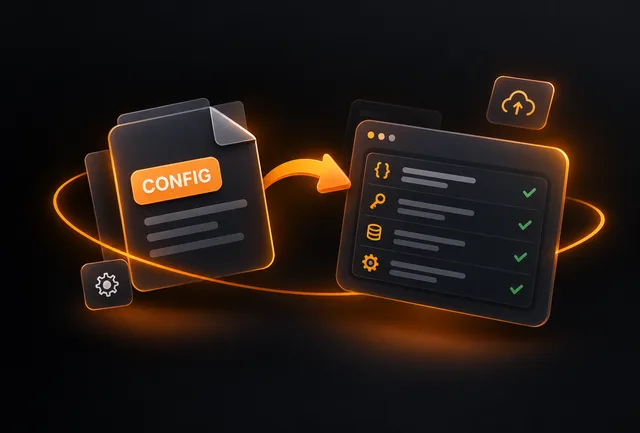
Import a config

Standalone link

Embedded on a site
Why a form needs measuring at all
A form builder tells you how many people submitted. That number cannot tell you whether the form is working, because it is missing the denominator and everything in between.
Views, not just submissions
Every form load is recorded, so a completion rate is a real ratio rather than a number divided by a guess. A form with 40 submissions means nothing until you know whether 60 people saw it or 6,000.
Where people stop
Per-field drop-off shows which question ends the session. It is almost never the one you would guess — phone numbers, salary ranges and anything asking for an ID are the usual culprits.
Where they came from
Every submission records the page it came from, so you can tell which landing page, campaign or blog post actually produces responses rather than traffic.
What form analytics actually shows you
A contact form that looks healthy on submissions alone. The drop-off chart is where the problem is: almost half of everyone who reaches the phone number field leaves at it.
Contact form — last 30 days
Sample data
Views
2,480
+9.2%Submissions
412
+4.1%Completion rate
16.6%
−2.8%Drop-off by field
2,480 opened the form · 412 finished it
- Name8% left
- Email10% left
- Phone number48% left
- Company size29% left
- Message46% left
- ContinuedStopped hereBar width is the share of everyone who opened the form.
Phone number loses 48% of everyone who reaches it — more than the other four fields combined. The fix is one setting, and it is only findable because the chart exists: make it optional, or show it conditionally to the people who actually want a callback.
What you can build
Forty-odd field types, dragged into place
Names, addresses, phones and emails with their own validation. Ratings, sliders, file uploads, date and time pickers, consent boxes, signature pads and generated identifiers. Multi-column layouts, so a first and last name sit side by side instead of stacked down the page.
Take payments, into your own account
A payment field turns a form into a checkout: registration fees, deposits, paid applications, donations. Charge a fixed amount, a price that follows an earlier answer, or whatever the respondent chooses to pay. Money moves through your own Razorpay, Cashfree or PayU account and lands with you, not with us — and a response is only recorded once the payment actually clears.
Conditional logic
Show a field only when an earlier answer calls for it. A support form that asks for an order number only from people who picked "problem with an order" is shorter for everyone else — and length is the single largest cause of abandonment.
Multi-step, with a progress bar
Split a long form into pages that validate as people advance. Twelve fields behind three steps convert better than twelve fields on one screen, and the step indicator is what tells someone the end is in sight.
Themed to look like your site
Colours, backgrounds, fonts, button size and alignment, label placement — set per form. An embedded form that looks like a third-party widget gets treated like one.
Embed anywhere, or share a link
One iframe snippet drops the form into any page on any stack. Or send the hosted link — the form works standalone, with no site required.
Entries as a board or a spreadsheet
Responses land in a kanban board you can move through review stages, export as CSV, or open individually and save as PDF for the person who needs a copy.
Connects to what you already pay for
Keys live in your workspace. We hold no merchant account and send no mail on your behalf — a form charges through your gateway and notifies through your mailer.
Payment gateways
- Razorpay
- Cashfree
- PayU
Email and forwarding
- Brevo
- Custom SMTP
- Webhook — Zapier, Make, or your own endpoint
What comes with every form
- Per-form views, submissions and completion rate
- Per-field drop-off, so you can see which question loses people
- Source URL on every submission
- Payments through your own Razorpay, Cashfree or PayU account — fixed, priced by answer, or respondent-chosen
- Notification email through Brevo or your own SMTP server, plus submission webhooks
- Conditional logic — show or hide a field on an earlier answer
- Multi-step forms with per-step validation and a progress indicator
- Honeypot spam trap and per-IP rate limiting on every public form
- CSV export of all entries, PDF export of any single submission
- Kanban review board for moving entries through stages
- Full theming — colours, fonts, backgrounds, layout and button styling
- Embed by iframe, or share the hosted link
Spam handled without a CAPTCHA
Every public form carries a honeypot field that people never see and bots reliably fill, plus per-IP rate limiting on the submission endpoint. Both are on by default and invisible to a real respondent — which is the point, because a CAPTCHA is itself a field people abandon at.
What forms do not do
There is no approval workflow with assignees and due dates, no recurring billing, and no legally binding e-signature — the signature field captures a drawn signature, which is not the same as a document routed for signing and audited. Payments are one-off, and refunds are issued from your Razorpay dashboard rather than here. If you need subscriptions or a document sent for countersigning, a dedicated tool will serve you better.
Common questions
- How is this different from Google Forms or Typeform?
- The analytics. Standalone form builders report how many people submitted; they cannot tell you how many arrived and left, or which field they left on, because they do not measure the page the form sits in. Quantalog records views and per-field drop-off alongside the rest of your site traffic, so a form is a funnel you can actually see rather than a submission counter.
- Do forms need a cookie consent banner?
- No. Forms follow the same cookieless model as the rest of Quantalog — nothing is stored in the visitor's browser to measure a view or a submission. The data a respondent types is of course stored, because that is what they filled the form in for, and IP collection for submissions is off by default and switchable per form.
- Can I embed a form on a site that Quantalog does not track?
- Yes. The embed is a plain iframe and works on any stack, tracked or not. Form views and submissions are recorded either way; the form's own analytics do not depend on the page around it running the tracker.
- What stops spam submissions?
- Two things, both on by default: a honeypot field that is invisible to people and irresistible to bots, and per-IP rate limiting on the public submission endpoint. Neither shows a CAPTCHA to a real respondent, because a CAPTCHA is itself a drop-off point.
- How do payments work, and do you take a cut?
- You connect your own gateway account once per workspace — Razorpay, Cashfree or PayU — and every paid form in it charges through those keys. The money goes directly to you: it never passes through Quantalog, and we take nothing beyond your normal plan. The gateway's fees are between you and them.
- What happens if someone abandons the payment?
- Nothing is charged and no response is recorded. Their answers stay on screen so they can try again without retyping, and the abandoned attempt is cleared automatically rather than sitting in your entries as a lead that never paid. A response is only confirmed once the gateway tells us the money arrived — not when the browser says so.
- Can respondents upload files?
- Yes — file, image and media upload fields are available, and uploads arrive attached to the submission alongside the rest of the answers.
- Can I see an individual response rather than a table?
- Yes. Any entry opens on its own, and exports to PDF from there — which is what you want when someone asks for a copy of what a particular person submitted. The full set exports as CSV.
Published . Last updated .

 Orbit AI
Ask instead of hunting for it
Describe the form and Orbit drafts it — fields, validation and the multi-step split. Once responses arrive it reads the free-text answers back to you as themes rather than a spreadsheet you have to sit and skim.
How Orbit works- Build a three-step onboarding form
- What are people complaining about?
- Which field loses the most people?
Build one and watch what happens
The free tier includes forms, their analytics and everything on this page. No card, and no separate subscription from your analytics.
Already measuring your traffic? See what else is in the same dashboard